
Technology is evolving at an unprecedented pace, reshaping how we make decisions and navigate daily work.
Tools like AI copilots and real-time analytics are becoming embedded in workflows, offering powerful capabilities that demand more than theoretical understanding.
Yet learning methods haven’t kept pace. While innovation accelerates, much of professional training still relies on static content and passive instruction. Simulation turns abstract concepts into lived experience and empowering people to engage, decide, and adapt in dynamic environments. In a world of fast-changing technology, confidence comes from playing or doing.
Limitations with Traditional Learning
While AI and digital tools continue to evolve at speed, the way we approach learning hasn’t always kept pace. Here are some of the key limitations holding traditional learning methods back:
Traditional formats are evolving. As technology advances, so too must our approach to learning for example, moving beyond webinars, manuals, and slide decks toward more immersive experiences.
Today’s work environment demands more. In a fast-paced, high-pressure world, learning needs to feel real, relevant, and responsive.
Deeper understanding is essential. As AI and automation become part of everyday systems, surface-level knowledge isn’t enough, teams need to confidently apply insights in real time.
Empowered teams adapt faster. When people engage in hands-on, scenario-based learning, they’re better equipped to make smart decisions and drive progress.
Learning should match the moment. To close the gap between training and real-world execution, we need formats that mirror the complexity and urgency of today’s challenges.
The Power of Simulation: Why Learning by Doing Works
Simulation offers an immersive approach to learning that turns ideas into action. By placing people in realistic scenarios that mirror everyday challenges, simulation creates an environment where learning is active, relevant, and immediately applicable.
It encourages deeper thinking by showing the consequences of decisions in real time, building instinct and understanding in ways that lectures can’t. Teams naturally collaborate, make informed choices, and see how their actions affect the bigger picture all within a safe, guided space.
Participants develop the kind of practical confidence that sticks, making simulation a powerful tool for both skill-building and strategic thinking rather than just absorbing information alone.
Simulation in the Age of AI: Why It Matters Now
As AI capabilities become more accessible and embedded into common platforms, the challenge is behavioural. People need to understand how to work with AI in context, not just in theory. Simulation provides a space where users can test AI-driven suggestions, explore outcomes, and gain a feel for how automation fits into real workflows.
It’s a sandbox for experimentation, one where trust can be built incrementally as teams gain firsthand experience with AI tools in action. This approach helps shift AI from a concept people hear about to a capability they’re comfortable using.
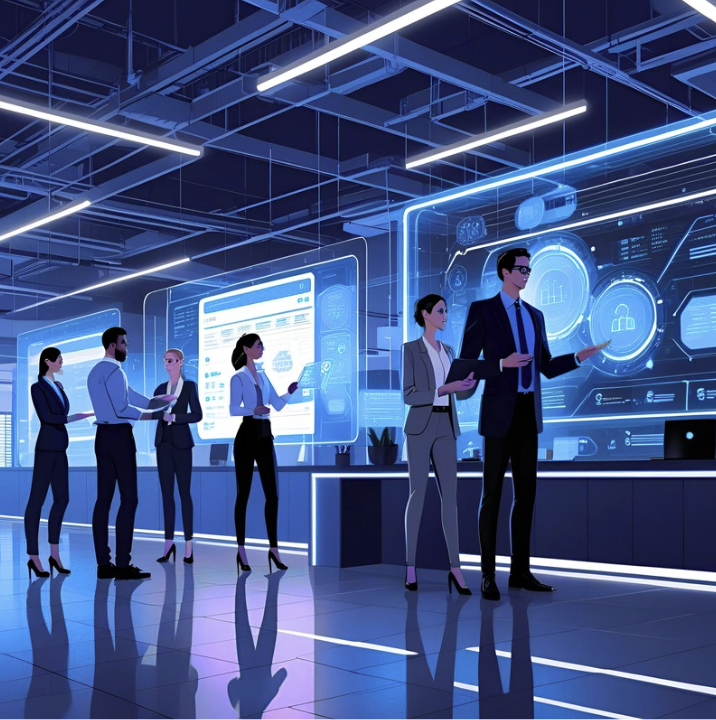
Why It’s Not Just a Game – It’s Strategy Enablement
The impact of simulation goes well beyond individual learning. It reveals where there are gaps in understanding, uncovers process misalignments, and helps align teams around shared goals.
As organisations prepare for change, simulation:
- Serves as a unifying tool
- Blends learning with alignment
- Helps generate buy-in in a way that feels organic, fast, and grounded in real experience
- Becomes a strategic asset for change leaders, decision-makers, and transformation teams alike.
We collaborate closely with trusted SAP partners who are already using simulation to bring their product presentations to life and the results speak for themselves. This approach not only deepens customer engagement but also builds confidence and clarity around complex solutions.
Conclusion
AI and emerging technologies are redefining how we work, but the tools alone aren’t enough.
Success depends on how confidently people can engage with what’s new, what’s possible, and what’s coming next. Simulation turns abstract concepts into experience, helping organisations move from passive learning to active capability-building.
In a landscape shaped by complexity and speed, learning through doing may be one of the smartest moves your organisation can make. This approach not only deepens customer engagement but also builds confidence and clarity around complex solutions.
If you’re interested in exploring how simulation could enhance your own presentations or enablement efforts, get in touch with us today. We’ll connect you with the right experts to help you get started.
