

In the last few years, the B2B buying journey has quietly but fundamentally changed. Not with one big, obvious shift, but through a series of small ones: pandemic-era digitisation, generational turnover in decision-making roles, rising expectations shaped by consumer tech. These shifts haven’t always been loud, but they’ve altered how buyers research, evaluate, and commit.
While sales decks are updated and digital channels refined, the deeper assumptions about what today’s buyers really need often go unchallenged. And the result is a growing mismatch, one that buyers may not voice directly but feel clearly during the buying process.
So, what are they looking for?
Let’s unpack why solving it changes everything.
Context Over Content
There’s no shortage of content in B2B. Case studies, webinars, white papers most vendors are producing more than ever before. But here’s the catch: buyers aren’t short on information, they’re short on relevance.
Much of what lands in their inboxes or search results looks the same: polished but generic, informative but impersonal. Its content built for personas, not people. And when everything sounds slightly interchangeable, nothing stands out.
For today’s B2B buyer, juggling internal pressure, tech debt, and rising expectations this kind of surface-level messaging doesn’t cut through. They’re not looking for another pitch. They’re looking for signs you understand their world.
By incorporating relevance and resonance it:
- Introduces the core mismatch between how vendors communicate and what buyers actually need.
- Highlights the emotional and cognitive gap in the buying process: not feeling understood.
- Are a root cause for many of the downstream frustrations buyers face (ignored emails, misaligned solutions, slow deal cycles).
When a vendor reflects a buyer’s real challenges clearly, whether that’s stage of growth or specific goals, the entire conversation shifts. It’s no longer about what the solution does, but what it can do for them.
That change might seem subtle, but it’s powerful. It builds trust before the first call. It creates traction before pricing even comes up. And it’s often what separates high-performing brands from the rest because they focus on what really matters.
💡 What feels like buyer hesitation is often just a lack of resonance.
Relevance reduces friction faster than persuasion ever can.
Frictionless Discovery
Modern B2B buyers have little patience for clunky buying experiences. If your website is hard to navigate, pricing is vague, or forms gate every piece of content, they’ll likely move on.
Expectations around digital usability have shifted. Nearly all buyers now want simple, fast, and accurate online experiences. But that doesn’t mean every buyer behaves the same way. Some prefer to explore on a digital marketplace. Others want to meet face-to-face or browse in-store. Flexibility has become the baseline.
According to recent data for B2B buyers:
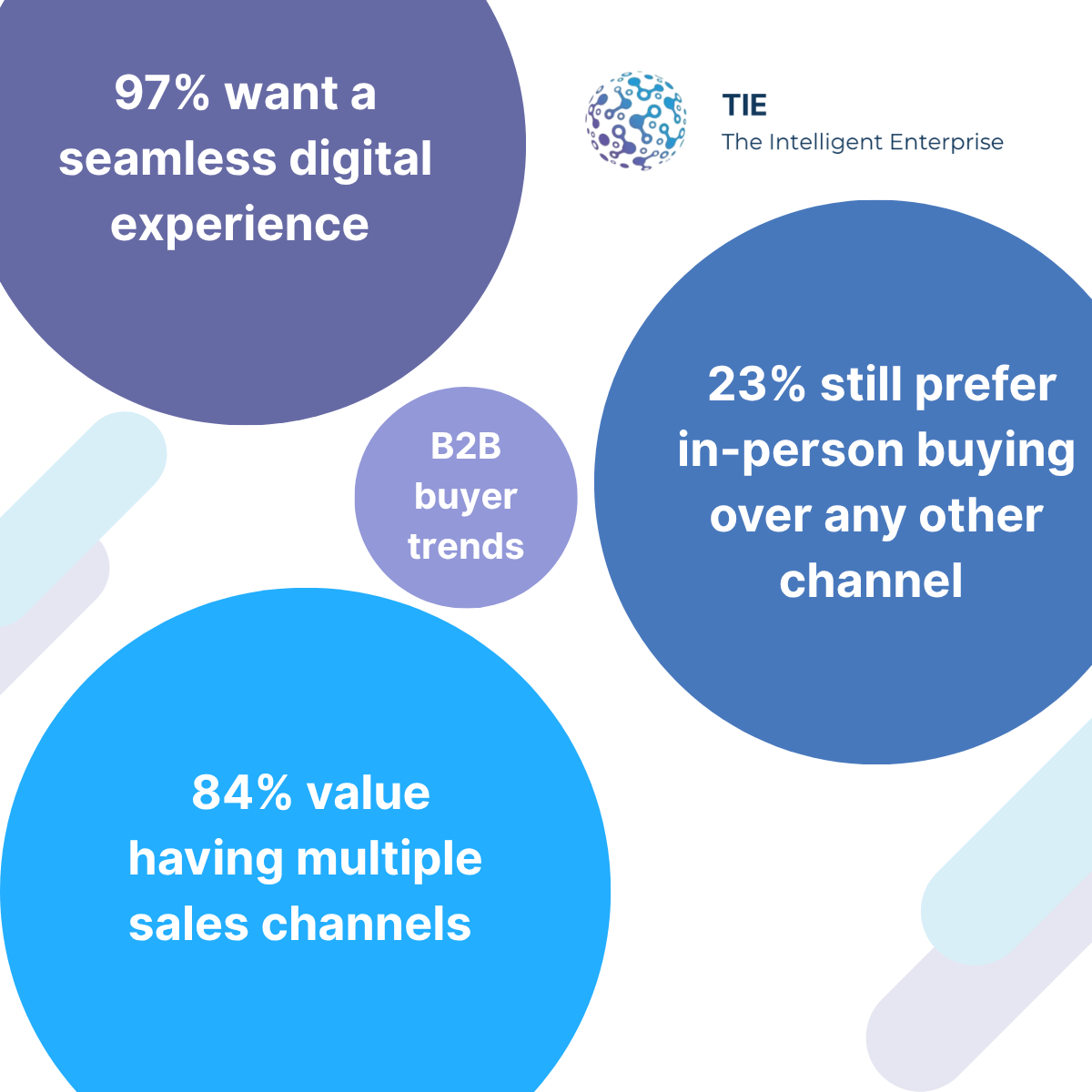
💡 It’s not about offering one perfect path. It’s about offering the right mix of options, all of which should be intuitive and user-first.
Once buyers find a path that works, they’re looking for more than a polished pitch, they want proof that your solution delivers, in environments like theirs.
Proof Over Promises
Bold product claims and brand positioning aren’t enough on their own. Buyers want evidence that your solution works not just in theory, but in situations like their own.
That evidence can take many forms:
- Well-crafted customer stories
- Clear performance metrics
- A recommendation from someone they trust
What matters is that it’s real, relevant, and easy to validate.
💡 Impact doesn’t need to be shouted. It needs to be shown through the lens of outcomes, not just features.
Values and Vision Alignment
Buyers are increasingly paying attention to who they buy from, not just what they buy. For many, it’s no longer enough to offer a strong product if the business behind it isn’t aligned with their values.
Things like ethical data practices, environmental responsibility, and inclusive hiring are becoming part of the buying criteria. This is especially true in regulated sectors and among millennial and Gen Z stakeholders.
Even when buyers don’t raise these topics directly, they’re often reviewing policies or watching how companies speak about responsibility in the public eye.
💡 A brand’s values should be reflected in how you market, sell, and show up every day.
As buyers place greater importance on shared values, they also expect those values to be reflected in every interaction, especially when it comes to the human side of the experience.
Real Humans, Real Time
B2B decisions are rarely simple. They often involve long timelines, multiple stakeholders, and plenty of uncertainty. What helps buyers navigate this complexity is quick, helpful support and a human voice when it matters.
At the same time, they don’t want to jump through hoops just to get answers. When they’re ready to talk, they expect sales or success teams to be ready too.
With buying cycles averaging 11.5 months and even longer for global deals, a single moment of friction or delay can create doubt. Add in the fact that 78% of buyers consider flexible payment terms a must-have, and it’s clear: responsiveness and adaptability aren’t perks. They’re expectations.
💡 The human side of B2B: empathy, speed, and clarity, often defines how a buyer feels about your brand more than your product ever will.
They May Not Say It but They Feel It
A lot of these expectations aren’t written down in RFPs or spelled out in discovery calls. But that doesn’t make them any less real.
When a vendor delivers a smooth buying experience and a thoughtful approach, it stands out. Buyers notice when support feels seamless and values align. And those positive impressions last long after the first conversation.
Conclusion
Understanding what today’s B2B buyers truly expect means going beyond the obvious. It’s about listening to what isn’t said, recognising the signals in how they engage, and delivering experiences that feel personal, intuitive, and trustworthy.
The brands that stand out are those that simplify complexity, show genuine understanding, and create real connection. When you meet buyers where they are and show up in ways that feel relevant and human, it’s easier to earn their attention and trust. And that trust is what turns interest into lasting partnerships.
At TIE, we turn insight into action – helping partners engage the right B2B buyers, in the right ways.
As a featured agency in the SAP Partner Benefits Catalog, we offer co-funded demand-generation programs and campaigns designed to meet today’s B2B buyer expectations — with relevance, speed, and measurable impact.
Want to hear more about our PBC offerings? Click Here
