We’ve all heard the advice when it comes to writing LinkedIn messages: keep it personalised.
And to some degree, I agree. A slightly more personalised message is always going to land better than something outrageously vague or completely ChatGPT-ified.
For example:
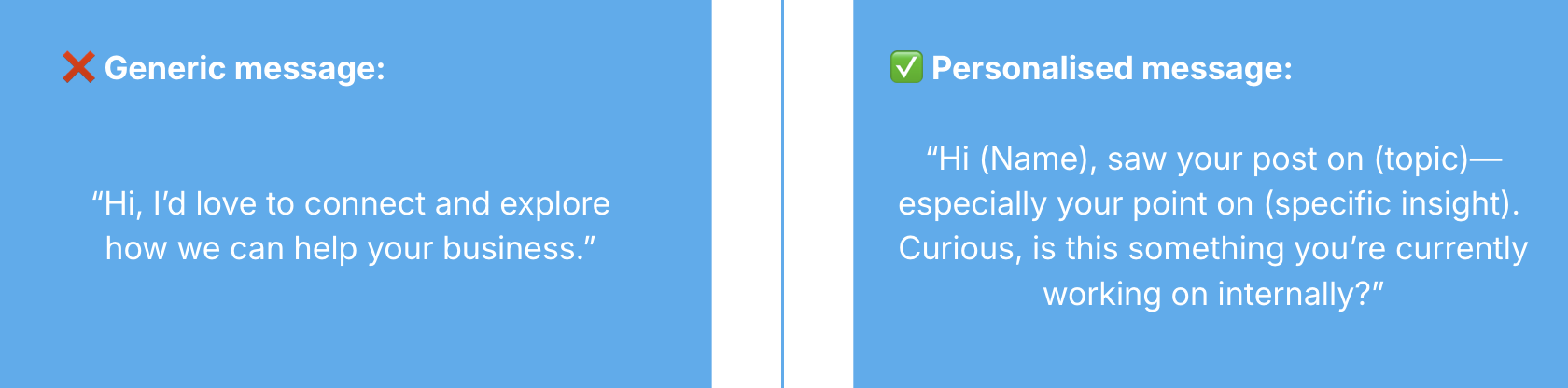
The personalised message will likely have a higher conversion, but there’s a balance: reaching out to someone you don’t know and sometimes going in with too many details about that person can come across a bit strange, or even slightly invasive. The real sweet spot is somewhere in the middle.
One of the biggest things is how easy it is for someone to actually do what you’re asking, and if it feels like effort, you’ll lose people. So, what actually makes a message land? Let’s dive in.
Why most LinkedIn messages don’t get a reply
Most LinkedIn messages don’t land for pretty simple reasons; they feel generic or overthought, or they feel like they’ve been sent to 100 other people.
You open it, skim it, meh, and move on.
Sometimes the message is too vague to care about, or other times it’s so detailed it feels like someone’s over-analysed your profile just to sell you something. Either way, it creates friction and makes it very easy to ignore.
Being honest works better than you might think
When we were looking to grow TIE’s LinkedIn following, we didn’t overthink the messaging or try to make it sound more polished than it needed to be when we reached out to connections.
We just said what we were doing and asked for support:
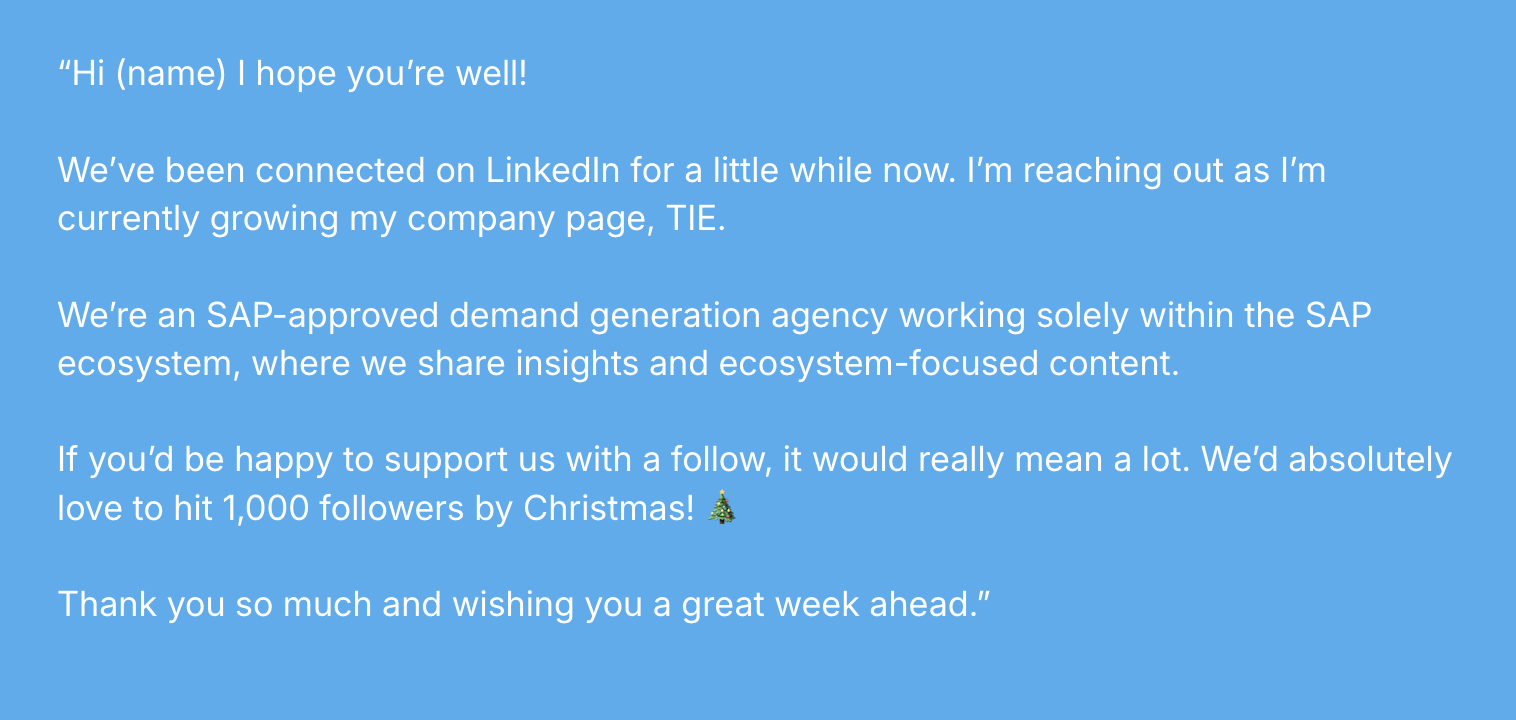
We kept it simple, clear, and we made the ask easy. And it worked.
We reached our target! The message resonated with people and easy to act on (and it probably didn’t hurt that it was nearly Christmas).
Why this works
People can tell when a message has had real thought put into it, and they can definitely tell when it hasn’t. The messages that land tend to feel considered and genuine. You don’t need to reference five things from someone’s profile or try to make it overly personalised, a small, relevant touch is usually enough.
What matters more is that the message feels natural, like something you’d actually say, rather than something that’s been over-optimised. There’s also a noticeable difference when a message feels human rather than automated. Today, a lot of outreach just blends into one big blur, same tone, same structure, very ChatGPT-style, and all a bit… beige.
And don’t get me wrong, ChatGPT is a fantastic tool (I’m even using it to help polish the very blog you’re reading now!), but when you start relying on it to do everything, things become a bit flavourless. So, adding a bit of personality into your message is often what helps it stand out in that sea of sameness.
How to apply this
Start simple, keep it easy to understand, quick to act on, and write it in a way that actually sounds like you. It doesn’t need to be long or perfectly written, it just needs to make sense and feel relevant, most of the time, less is better. When a message feels easy to read and easy to reply to, people are much more likely to engage, and it removes that little bit of friction that usually makes people ignore things.
It may sound obvious, but just read your message back and imagine it landing in your own inbox. Would you reply to it? Does it feel easy or actually worth your time?
Here’s a quick checklist before you hit send
- Is it clear why you’re reaching out?
- Is the message easy to read and not too long?
- Does it sound like you?
- Is the ask simple and quick to act on?
- Does it feel human rather than automated?
Conclusion
In summary, there’s no exact formula for getting people to reply to LinkedIn messages as people are getting them all the time. But when it’s easy for someone to read and respond, and it feels like it’s come from a real person, it naturally stands out.
And that’s usually what gets a reply.
