
True growth is built on trust.
Clicks are easy to overvalue in an industry that’s increasingly driven by data and numbers. A high CTR or strong email open rate may feel like a success, but we often see in the SAP ecosystem that a click is only the beginning.
To thrive as an SAP partner, it’s time to prioritise building long-term relationships over chasing short-term metrics.
This blog explores what that looks like in practice and how to evolve your marketing to reflect it.
Why Relationships Matter in the SAP Ecosystem
SAP is not a quick-sell environment. Purchasing decisions are often complex, involving multiple stakeholders and requiring careful alignment between technological capabilities, strategic business value, and timing.
In this context, building strong relationships is essential.
Here’s why:
Decisions are consensus-driven: Gaining stakeholder alignment depends heavily on trust and credibility, which frequently serve as the deciding factors.
SAP buyers are more likely to engage with partners who demonstrate consistency, expertise, and long-term commitment, not just tactical offers.
Co-selling with SAP demands strong internal networks and influence – you need advocates, not just alignment.
So, reputation becomes your competitive edge.
Building Trust Before the Funnel
Trust is not earned by asking for a meeting straight away, it’s earned by offering value, consistency and showing up without expectations.
Thought leadership
Share original perspectives on SAP’s key focus areas like RISE with SAP, AI adoption, or sustainability through the green ledger.
Create visibility through value
Post regularly with practical insights, not just promotions. Share takeaways from events, customer questions, or SAP updates.
Use peer validation
Use case studies, partner testimonials, and SAP-approved content to show you’re credible and connected in the ecosystem.
Creating Human Touchpoints at Scale
Modern marketing is about delivering personalised experiences at scale that feel genuinely human.
Make your outreach more human
Use email and LinkedIn to start conversations, not just drive CTAs.
Ask questions, share useful content, and open the door to conversation.
Balance automation with relevance
A smaller, highly tailored campaign will outperform a generic one.
Equip your teams with consultative messaging
Move away from scripts. Give your marketing, sales, and alliance teams messaging that sounds helpful, not pushy.
Measure What Matters
Click-through rates and impressions aren’t completely irrelevant but they’re not enough.
Instead, track indicators that reflect growing trust and intent:
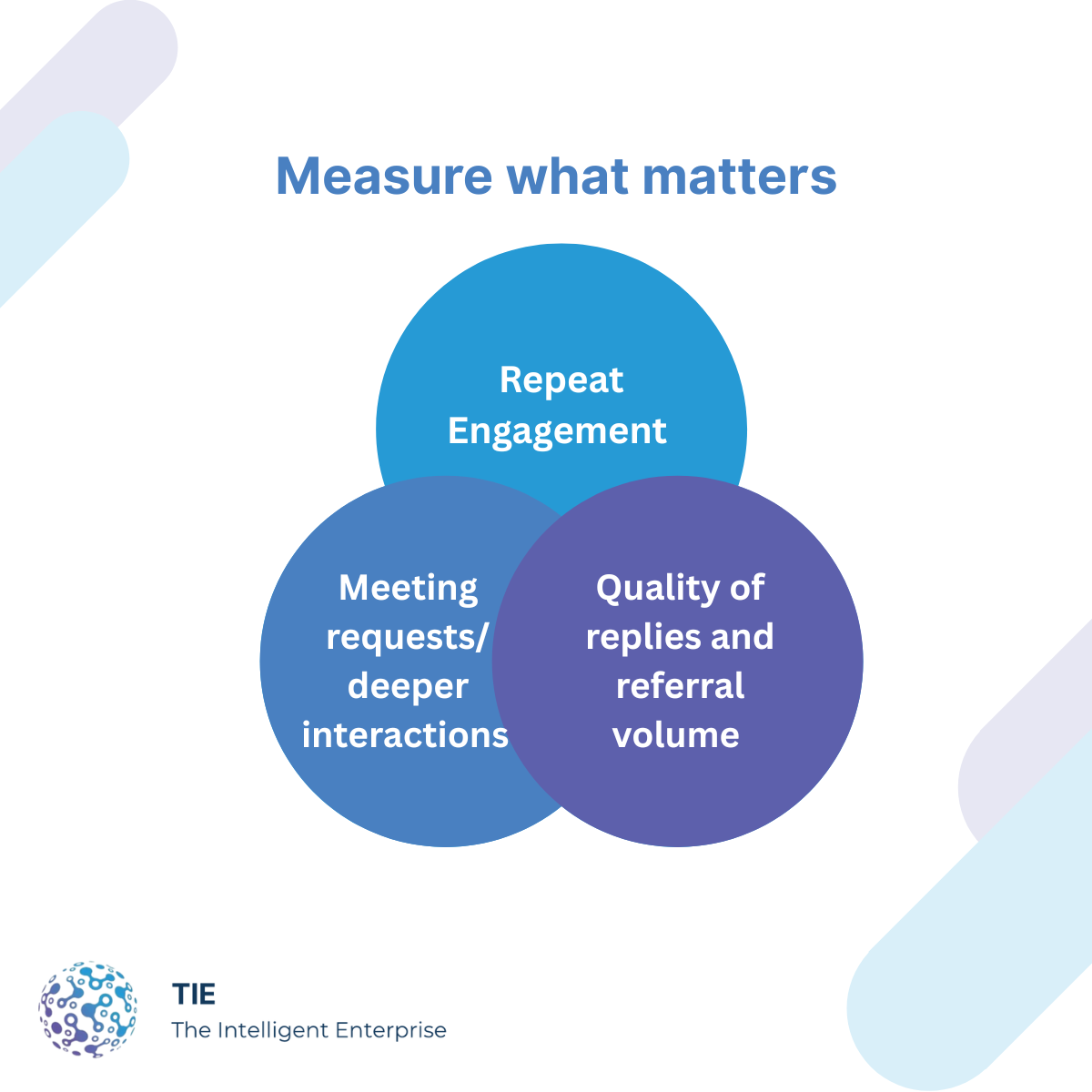
To be truly effective, align marketing KPIs to pipeline velocity and influence.
Sustaining Momentum Post-Engagement
The real work begins after the first touchpoint.
Nurture based on interests
Segment your audience by topic, not just stage. AI buyers need different content than S/4HANA migration leads.
Use follow-up to build
Treat every interaction as part of an ongoing conversation. Reference previous exchanges and offer something new.
Stay aligned with sales and alliances
Share insights, track activity, and build collaborative plans to keep key relationships moving forward.
Conclusion
Clicks are signals, relationships are assets.
In a high-trust ecosystem like SAP’s, brand equity and reputation are just as important as demand generation. By investing in consistent, human, value-led marketing before, during and after the funnel, SAP partners can build the kind of relationships that drive long-lasting pipeline and opportunity.
